
Updated: April 15, 2026
Across Brazil’s beauty schools and academies, access to affordable higher education remains a pivotal factor in shaping careers. In this context, prouni—Programa Universidade para Todos—has become a focal point for students aiming to pursue cosmetology, aesthetics, and makeup artistry through private institutions. This analysis examines how prouni works, what is known today, and how potential changes could reshape pathways into beauty careers.
What We Know So Far
Confirmed facts:
- Prouni is a Brazilian federal program that provides scholarships for undergraduate study in private higher education institutions, funded and coordinated by the Ministry of Education.
- Scholarships can cover partial or full tuition, depending on the student’s income and performance criteria as established in official guidelines.
- The program is designed to broaden access to higher education, with annual cycles and public updates on eligibility, deadlines, and participating institutions.
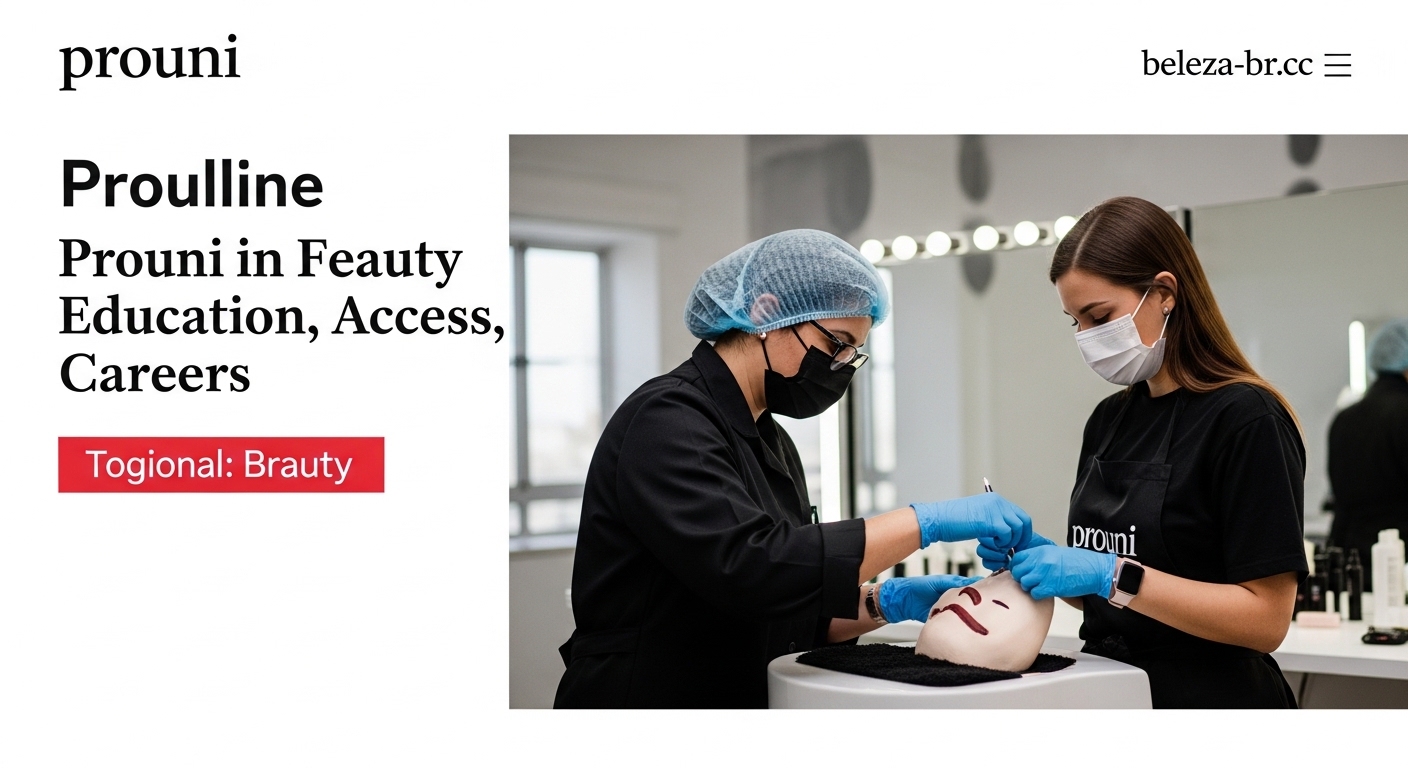
- Beauty-related programs—such as cosmetology, esthetics, and cosmetics—can be offered by private colleges that participate in Prouni, enabling students to pursue these fields with financial support when eligible.
- Selection typically involves the ENEM exam results and household income information, and beneficiaries must maintain academic progress to retain funding.
What Is Not Confirmed Yet
- Unconfirmed: Any new, dedicated prouni track restricted to beauty programs has not been publicly announced by the MEC as of this update.
- Unconfirmed: Specific changes to scholarship amounts or eligibility thresholds for 2026 have not been published; readers should monitor official portals for updates.
- Unconfirmed: The number of participating private beauty schools in upcoming cycles is not yet published; regional availability may vary.
Why Readers Can Trust This Update
We rely on primary, official sources where possible, and we clearly separate verified information from speculation. For background on prouni policy and its role in education access, we reference government guidance and credible analysis, and we include explicit notes when details are not yet confirmed. This reporting also ties to broader trends in Brazil’s higher education funding and the beauty sector’s demand for skilled professionals.
Actionable Takeaways
- If you’re a student: check your ENEM results and income documentation, then review the MEC’s official prouni portal to assess eligibility and upcoming deadlines.
- If you’re considering a beauty program: identify private institutions that participate in prouni and compare scholarship coverage, campus facilities, and internship opportunities.
- Prepare required documentation early: ID, CPF, proof of income, academic records, and any required certificates for program admission.
- Engage with guidance services at your school or community center to navigate the application process and avoid missed deadlines.
- Use official government portals and verified institutional pages as your primary sources of information to minimize misinformation.
Source Context
The following sources were used to frame the broader media landscape and to provide references for related topics discussed in this update. They are included here for transparency and context:
- Pokémon Pokopia event coverage on Pokemon.com
- Pokémon Pokopia: Mystery Gift Codes List
- Here’s When You’ll Be Able to Play Pokémon Pokopia in Your Timezone (IGN)
Last updated: 2026-03-05 00:46 Asia/Taipei
From an editorial perspective, separate confirmed facts from early speculation and revisit assumptions as new verified information appears.
Track official statements, compare independent outlets, and focus on what is confirmed versus what remains under investigation.
For practical decisions, evaluate near-term risk, likely scenarios, and timing before reacting to fast-moving headlines.
Use source quality checks: publication reputation, named attribution, publication time, and consistency across multiple reports.
Cross-check key numbers, proper names, and dates before drawing conclusions; early reporting can shift as agencies, teams, or companies release fuller context.
When claims rely on anonymous sourcing, treat them as provisional signals and wait for corroboration from official records or multiple independent outlets.
Policy, legal, and market implications often unfold in phases; a disciplined timeline view helps avoid overreacting to one headline or social snippet.
Local audience impact should be mapped by sector, region, and household effect so readers can connect macro developments to concrete daily decisions.
Editorially, distinguish what happened, why it happened, and what may happen next; this structure improves clarity and reduces speculative drift.
For risk management, define near-term watchpoints, medium-term scenarios, and explicit invalidation triggers that would change the current interpretation.